
Dahlia Growing Guide
Dahlias are one of the most joyful flowers you can grow. They are productive, colorful, and endlessly varied. After years of tending our own collection here at Prairie’s Edge Garden, we’ve learned a little about what helps them thrive in our climate: Zone 5b. Consider this your friendly, approachable beginners guide to growing dahlias with confidence.
Planting Dahlias
When to Plant
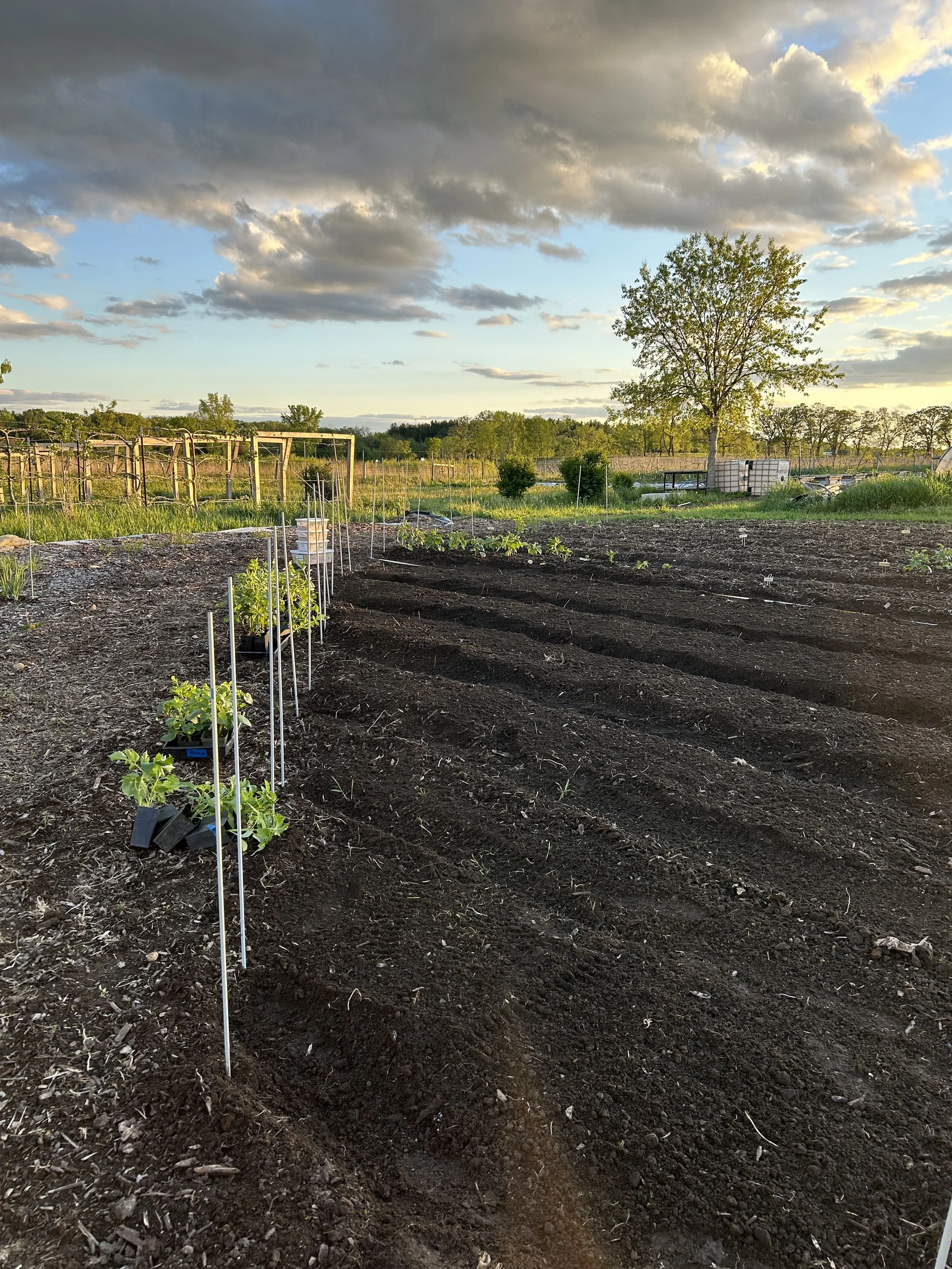
Dahlias go in the ground after your last frost and once the soil warms. This is usually late May in northern Illinois. Cold soil can slow or rot tubers, so waiting usually pays off.
Where They Thrive
Full sun: 6+ hours
Loose, well-draining soil
A little compost is great (if you can)
How to Plant Tubers
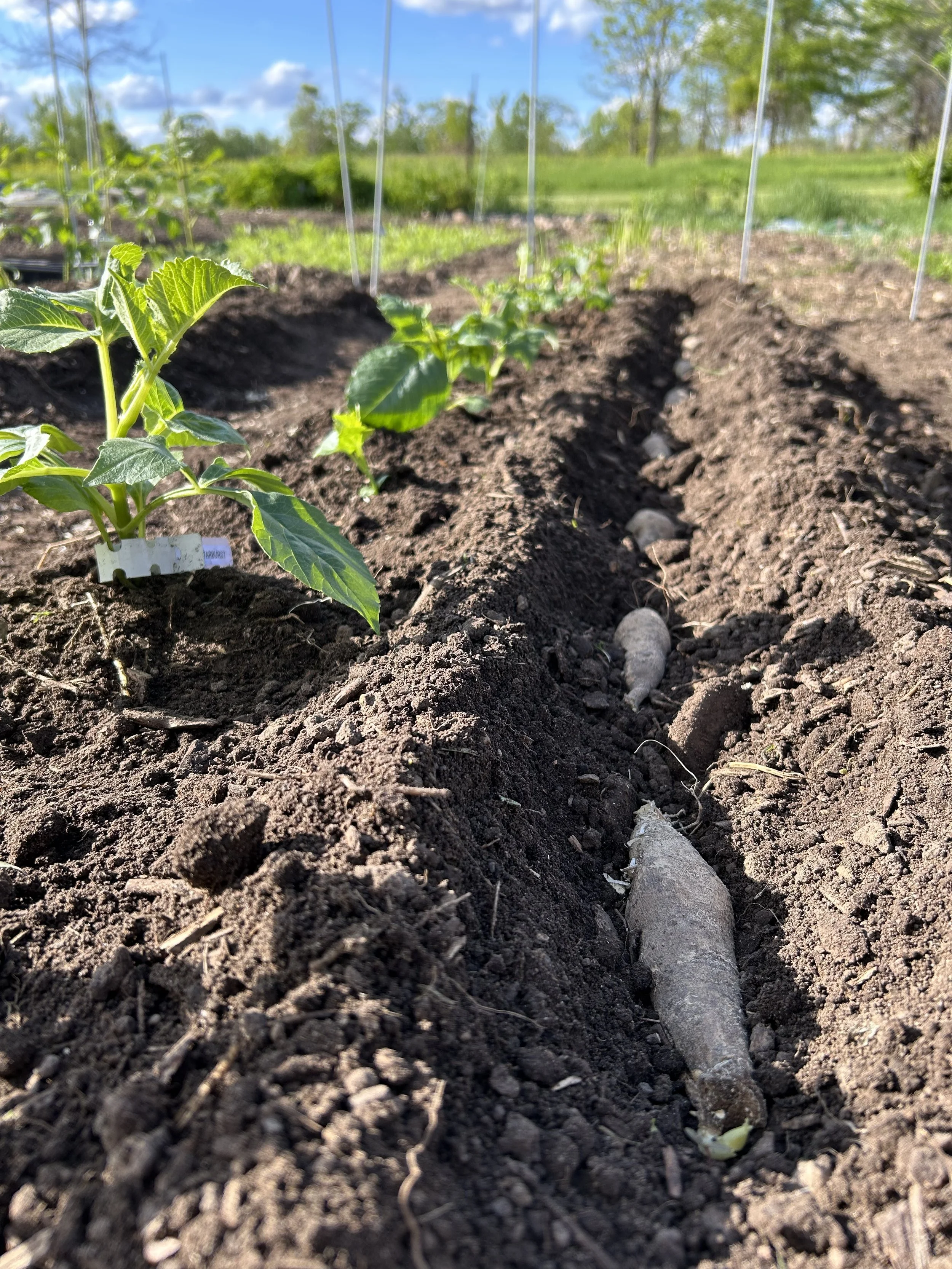
Dig a 3-5” deep trough when planting tubers.
Lay the tuber horizontally with the “eye” or sprout facing up.
Cover lightly.
Space about 12-18" apart for good airflow.
Water once green growth appears.
You can also plant dahlias vertically with the neck and eye exposed above the soil line. We often use this method when starting our own plants so we can easily monitor sprouting and ensure we have the numbers needed for our rows. This technique helps you avoid overwatering, confirm viability early, and keep a close eye on each tuber’s progress. Once growth is established, simply backfill around the stem as needed, or plant out into the garden with the tuber below the soil line once the time comes.
Why no early watering?
A tuber without roots can't uptake water. Overly wet soil can cause rot long before the plant gets started.
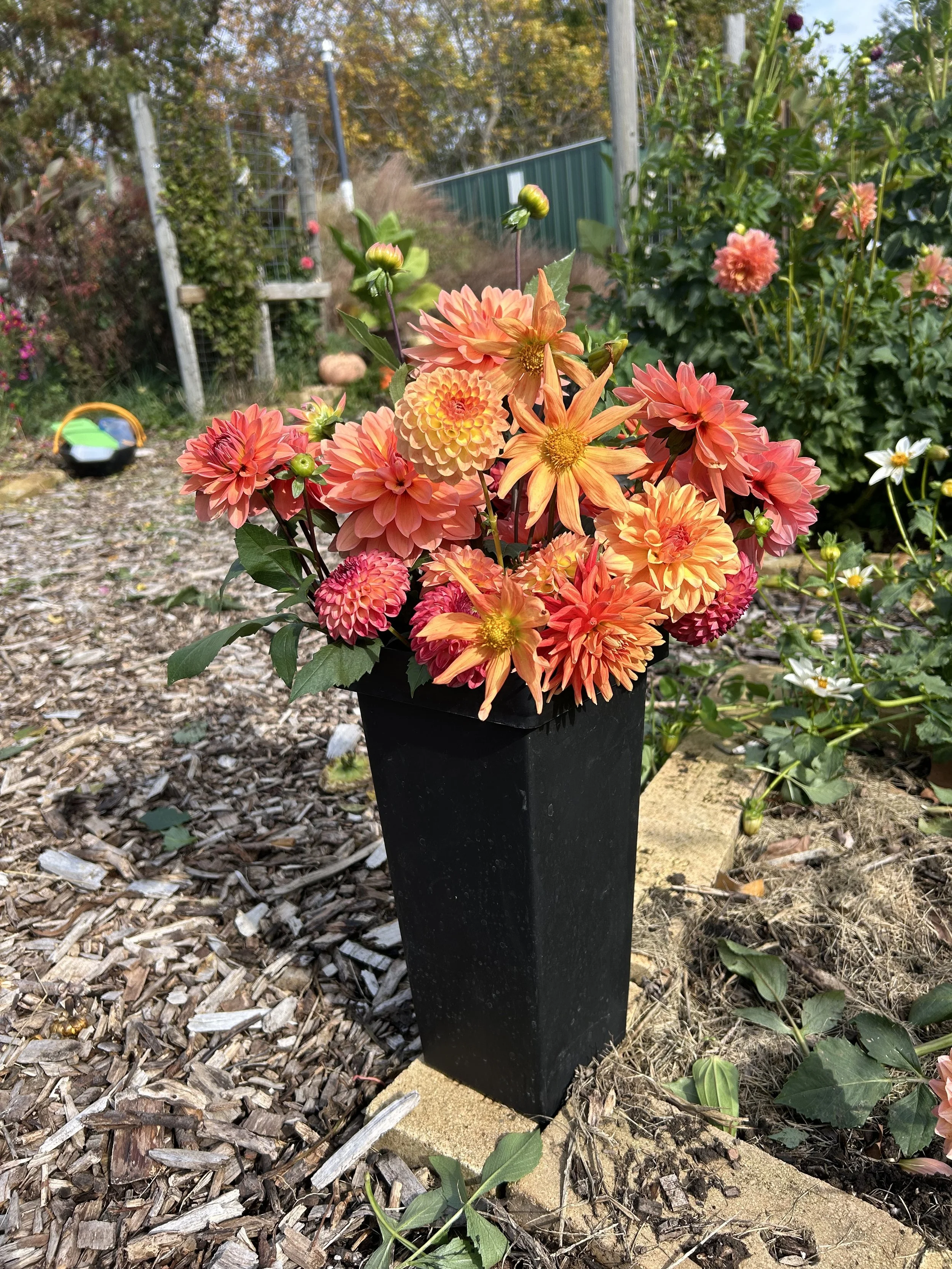
Growing
Once plants reach 6–8", begin watering consistently.
Deep watering every few days is better than light, frequent watering.
Avoid soaked soil, which encourages disease.
Pinching for Better Blooms
When plants hit 8–12" tall (or 3-4 sets of true leaves), pinch out the top sets of leaves. This encourages branching, more stems, and a sturdier plant.
It may feel counterintuitive, but it truly increases flower production.
Harvesting
Unlike many flowers, dahlias don’t open much after cutting so harvest when they are mostly open. Cut in the morning or evening for longest vase life. Typically you can expect to enjoy blooms for 4 to 7 days. Dinnerplate varieties are often short lived (3-4 days). Smaller, tighter ball forms can last up to 10 days with proper care and frequent water changes.
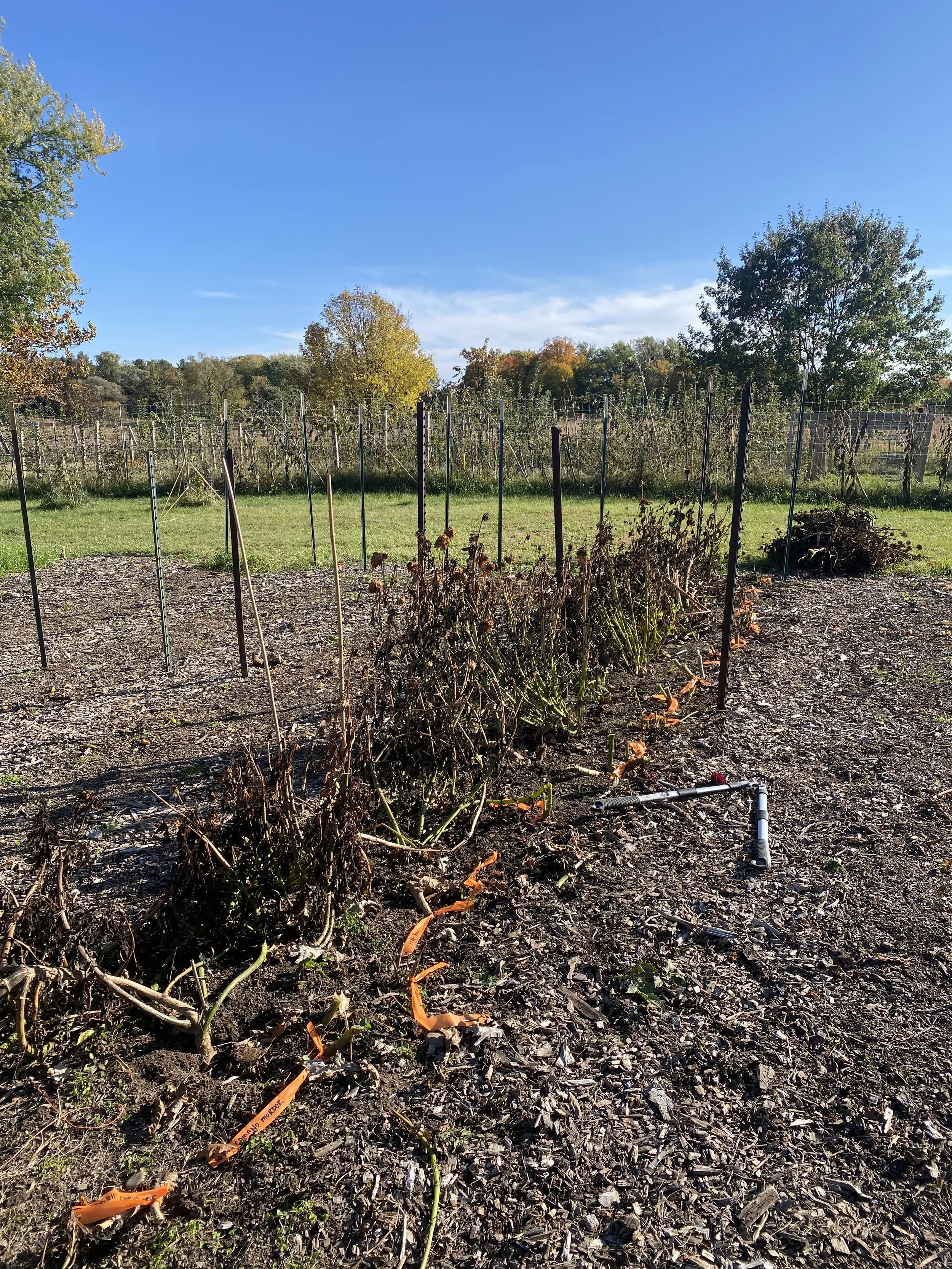
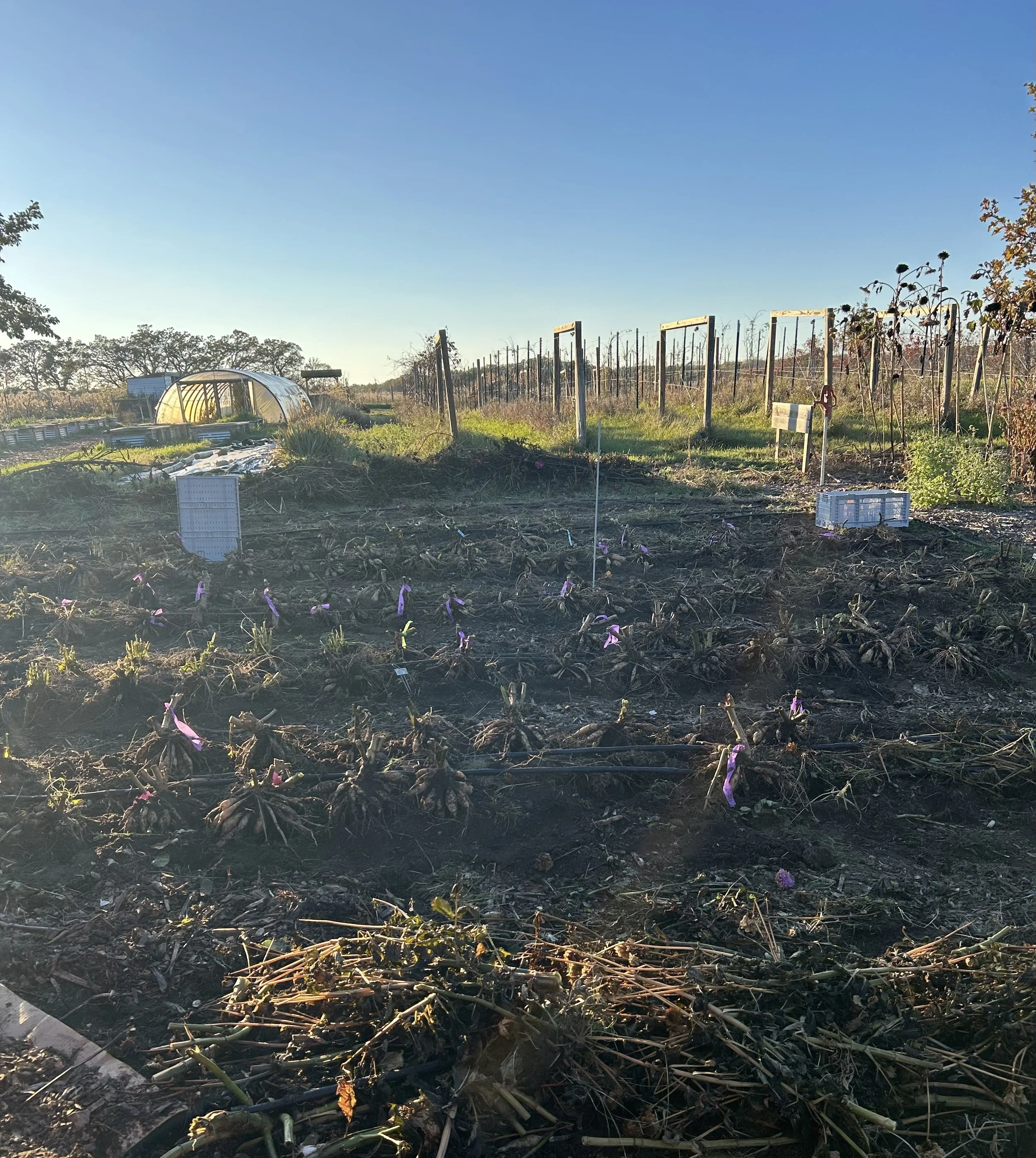
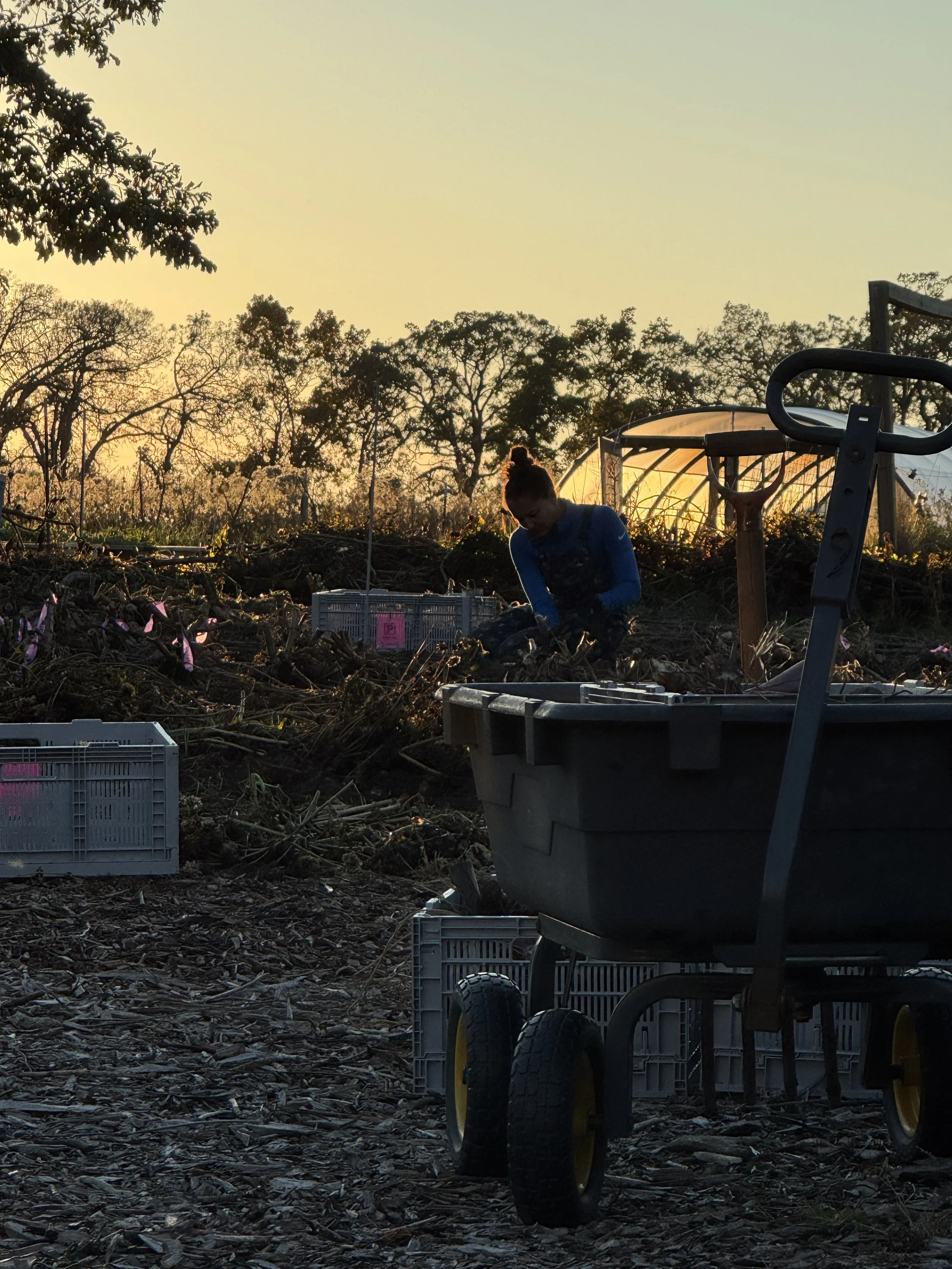
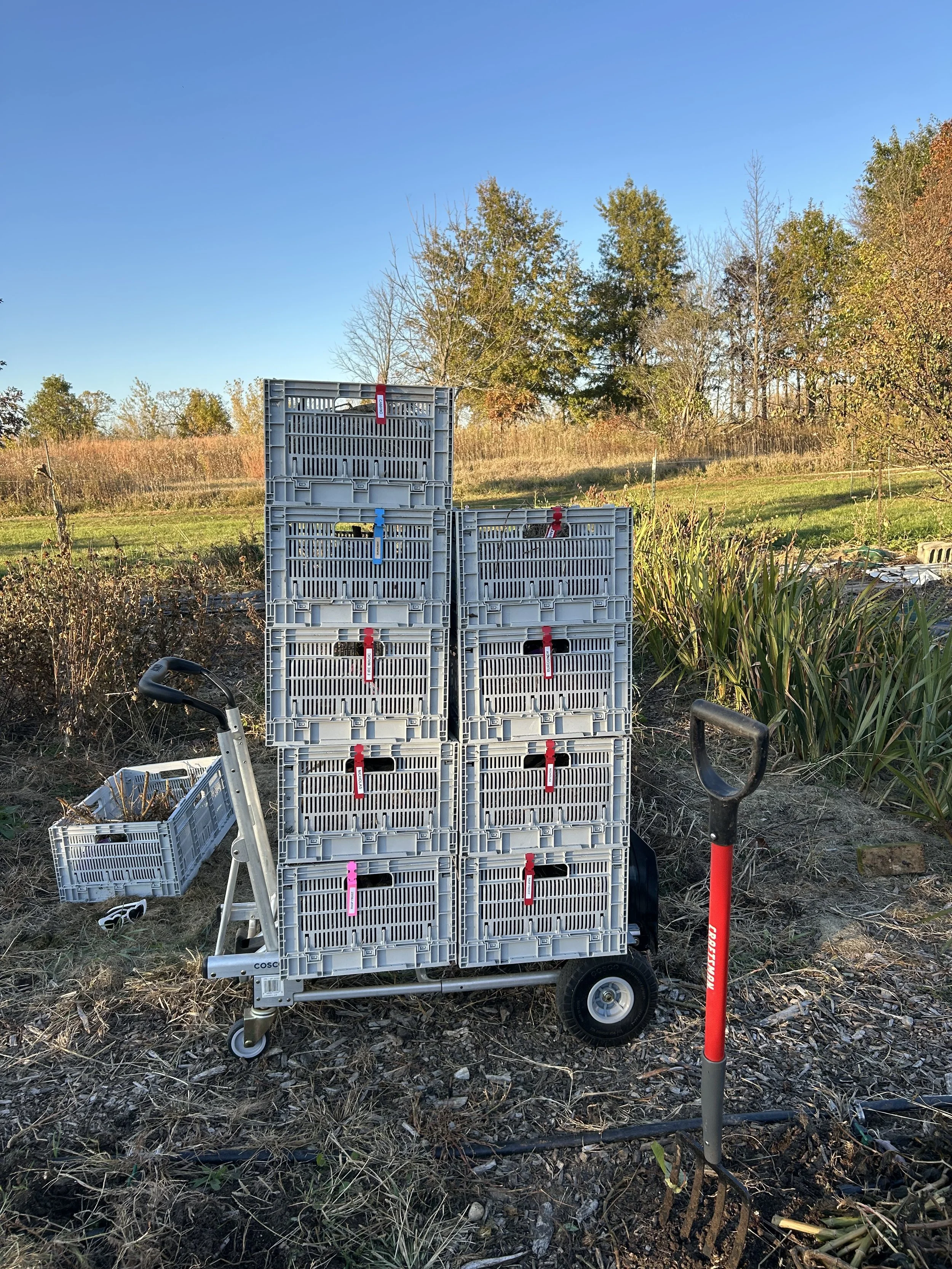
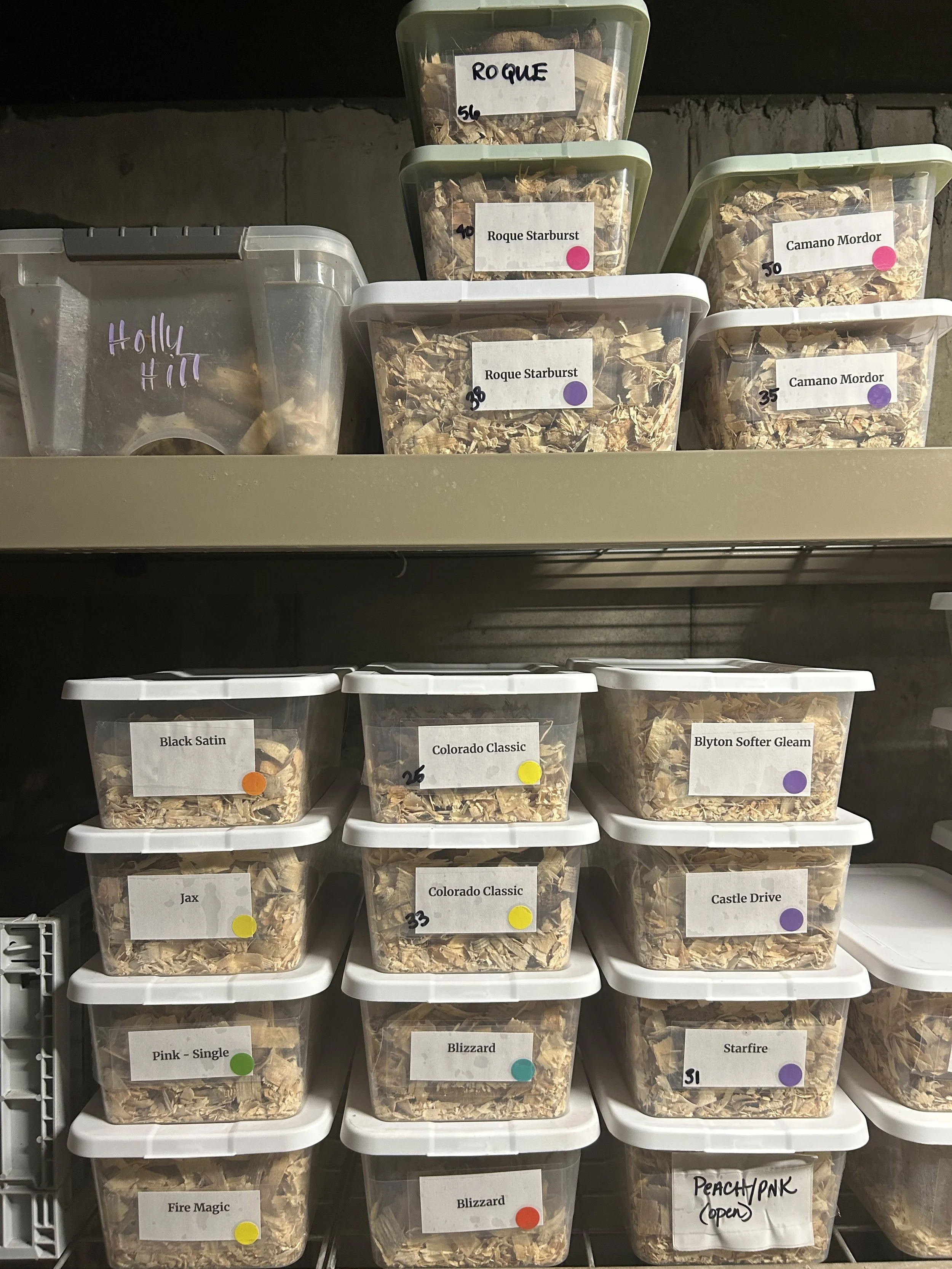
End-of-Season Care (Zone 5b)
Dahlias are not winter-hardy here. Once a hard frost blackens the foliage:
Cut stems back to 4–6".
Gently dig up tubers.
Brush off excess soil (no washing).*
Cure in a cool, dry place for 3–5 days.
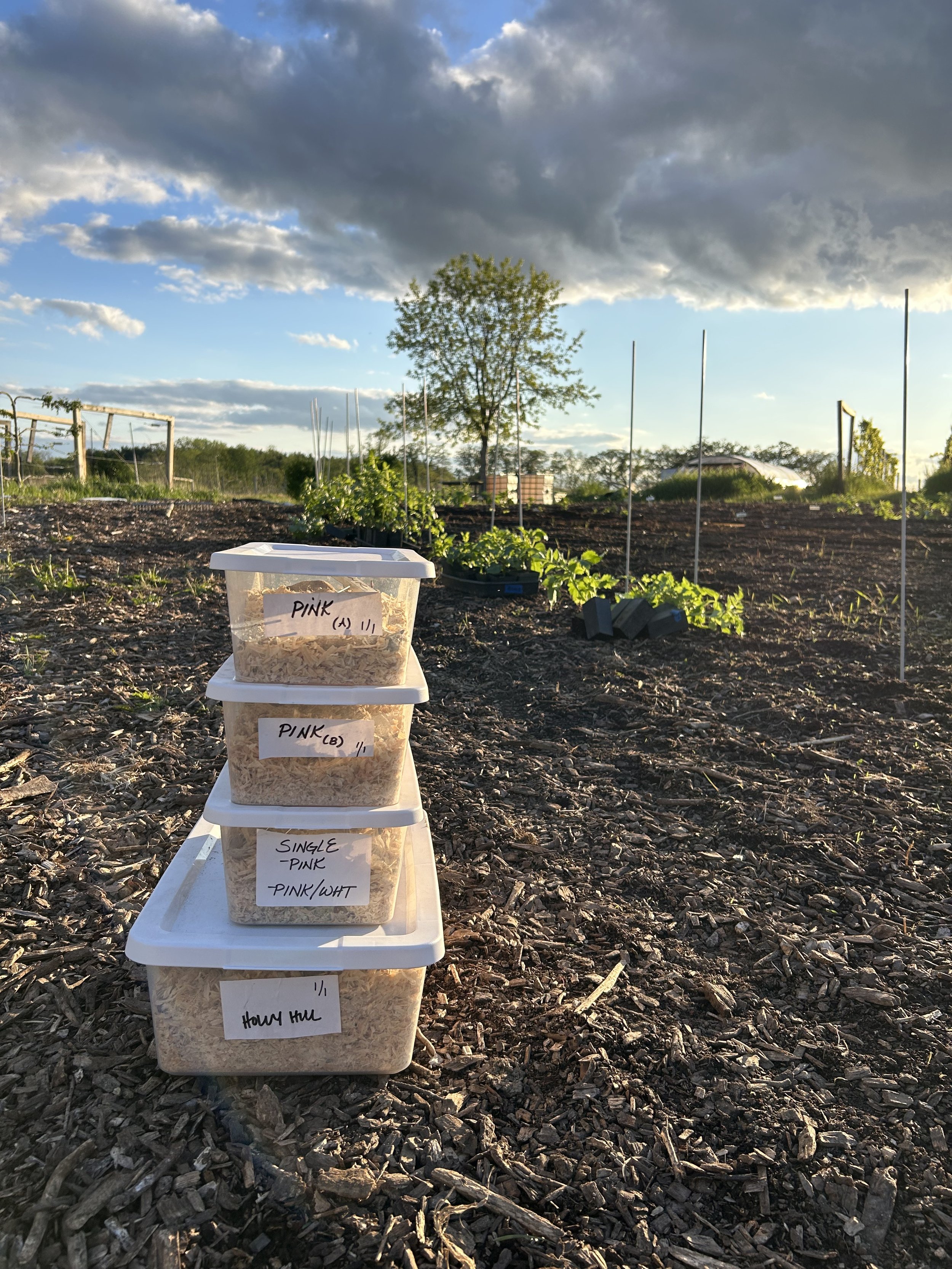
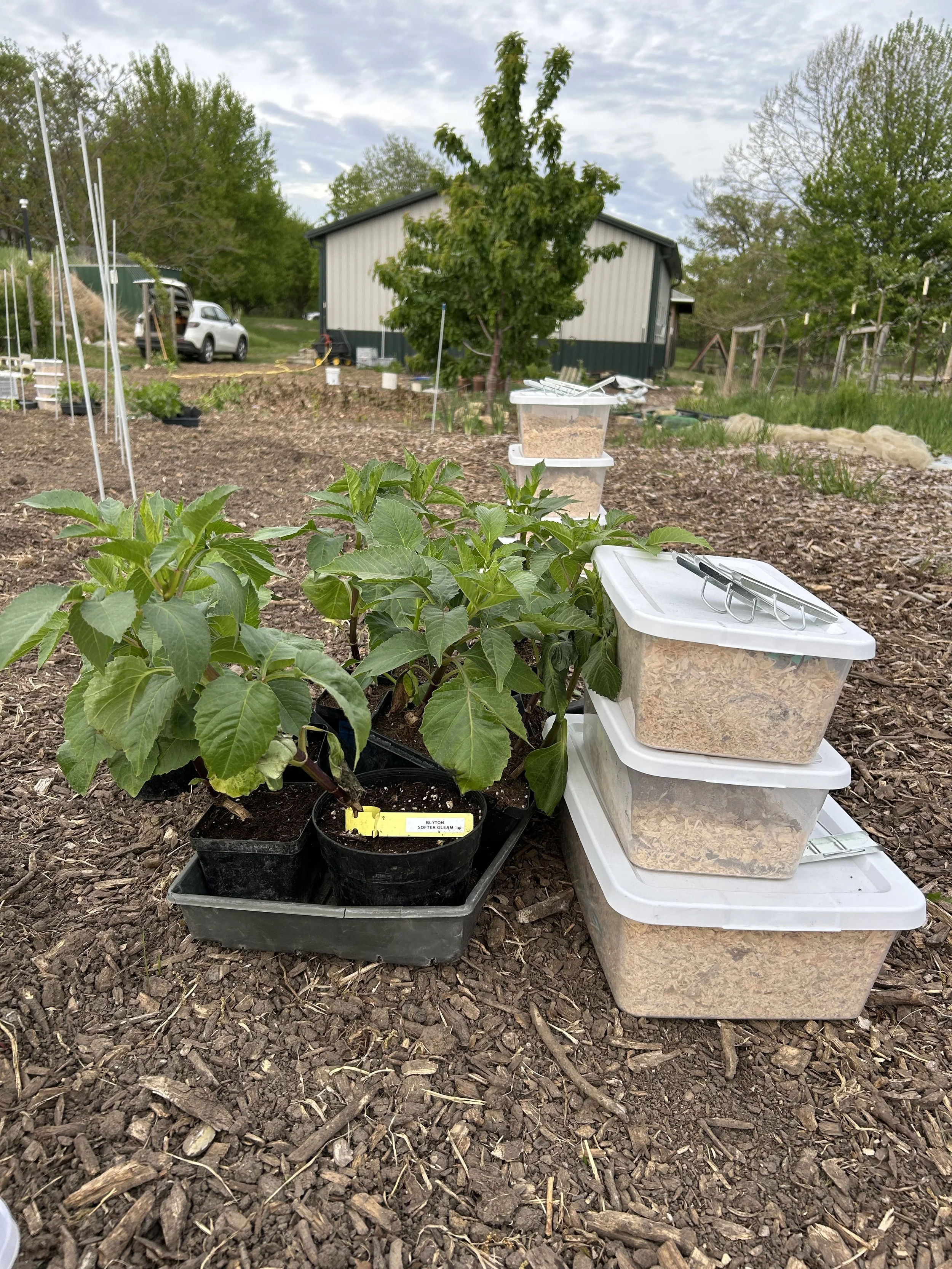
Store in peat moss, sawdust, or wood shavings at 40–50°F.
Check monthly for shriveling or mold and adjust moisture levels as needed. With good storage, one tuber becomes many when it’s time to divide.
*We usually wash when we are ready to divide. If you are ready to separate your tuber clumps right away you can proceed with washing. However, storing them unwashed prevents tubers from losing moisture.
Dividing Dahlia Tubers
Dividing dahlias can feel intimidating at first, but it doesn’t have to be. Each tuber must have a viable eye attached to the neck in order to grow, which is why many growers worry about cutting incorrectly. If you’re unsure or nervous, you can simply keep larger clusters intact and replant the whole clump the following season. It will grow beautifully and often produce multiple stems. Division is helpful for expanding your stock, but it is not required. Grow at your comfort level.
Recommended Resources
If you're eager to dive deeper into the world of dahlias, we love:
Coseytown Dahlias – excellent grower with great tutorials and handy guides
Floret Flower Farm– inspiration, education, and beautiful photography
Book: Discovering Dahlias by Erin Benzakein – a must-have guide